
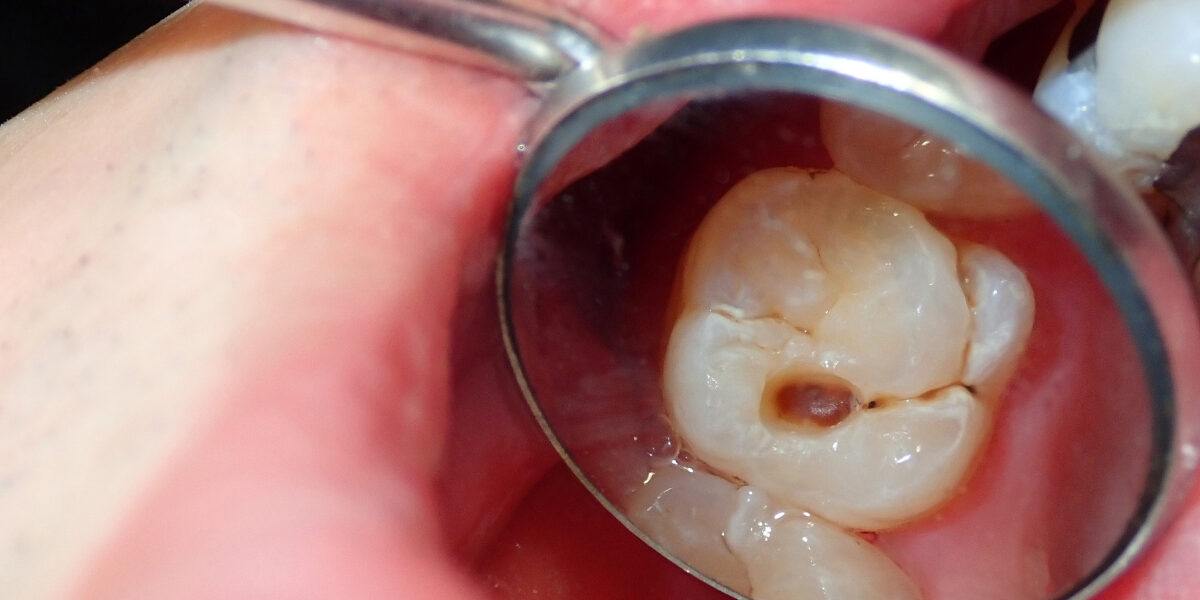
When a patient develops one cavity after another, simply repairing each damaged tooth may not answer the most important question: why does the decay keep happening?
Tooth decay is not just a hole that suddenly appears in a tooth. It is the result of an ongoing disease process involving oral bacteria, dietary exposures, saliva, the condition of the teeth, daily habits, and other factors that influence the environment inside the mouth. The American Dental Association describes dental caries as a biofilm-mediated, sugar-driven, multifactorial disease, which helps explain why two people with seemingly similar brushing habits can have very different experiences with cavities.
At The Center for Systemic Dentistry in Berkeley Heights, New Jersey, our approach is to treat the existing dental problem while also looking carefully at the conditions that may be allowing decay to continue. For patients who repeatedly need fillings, crowns, or other restorative treatment, understanding those underlying factors can be an important part of creating a more effective long-term dental plan.
Recurrent Tooth Decay Is Often a Pattern
A new cavity needs treatment, but repeated cavities deserve investigation.
Traditional restorative dentistry is very effective at removing damaged tooth structure and rebuilding a tooth. The difficulty is that a filling does not automatically change the environment that caused the tooth to decay in the first place. If the conditions that promote demineralization remain present, another area of decay can develop later.
This is one reason a systemic or holistic dentist may spend more time reviewing the patient’s history rather than viewing every cavity as an isolated event.
Where is the decay occurring? How quickly is it developing? Is it forming around older restorations? Has the patient’s oral health changed recently? Has there been a change in medications, diet, sleep, hydration, stress, medical history, or daily routine?
Patterns can provide useful clues.
Saliva May Be One of the Most Overlooked Factors
Saliva plays an important protective role in the mouth. It helps wash away food particles, dilute acids, control microorganisms, and support the natural remineralization process that occurs after teeth are exposed to acids.
When saliva production decreases, that protection is reduced.
Persistent dry mouth is associated with a higher risk of tooth decay because saliva normally helps control harmful microorganisms and protect the teeth.
For someone who suddenly begins developing cavities despite having relatively good dental habits, evaluating dry mouth can therefore be particularly important.
Dry mouth can have many possible contributors. Certain medications can reduce saliva production, as can some medical conditions and treatments. Dehydration may contribute as well. Some people also experience significant oral dryness while sleeping.
Rather than simply telling a patient to brush more often, a holistic dental evaluation may ask whether the mouth has enough saliva to provide the protection the teeth need.
How Often You Eat Can Matter as Much as What You Eat
Patients commonly associate tooth decay with candy and soda, but the relationship between diet and cavities is more complicated than simply avoiding sweets.
Bacteria within dental plaque metabolize fermentable carbohydrates and produce acids. Those acids lower the pH around the tooth and encourage mineral loss from enamel. Saliva then helps the mouth recover and supports remineralization.
Problems can develop when the teeth are repeatedly exposed to fermentable carbohydrates throughout the day.
Someone who continuously snacks, sips a sweetened beverage over several hours, frequently drinks sweetened coffee, or consumes carbohydrates in small amounts throughout the day may be creating repeated acid challenges for the teeth.
This means frequency matters.
A holistic dentist may therefore ask not only what a patient eats, but when and how frequently the teeth are exposed to foods and beverages that can influence the oral environment.
The goal is not to place every patient on a restrictive diet. It is to identify habits that may be unintentionally maintaining conditions favorable to decay.
The Oral Environment Matters
The mouth contains a complex community of microorganisms. Having bacteria in the mouth is normal. Tooth decay becomes more likely when the balance of the oral environment consistently favors acid production and mineral loss.
That is an important distinction.
The objective is not to somehow eliminate all bacteria from the mouth. Instead, good preventive care is intended to reduce harmful plaque accumulation and help create conditions that favor healthy teeth and gums.
This is another reason recurrent decay should not automatically be interpreted as evidence that someone simply has “bad teeth.”
Dental caries is influenced by biological, behavioral, and environmental factors. Understanding which factors are most important for a particular patient allows treatment recommendations to be more individualized.
Older Dental Work Deserves Careful Evaluation
Sometimes recurrent decay develops around an existing filling, crown, bridge, or other restoration.
Dental restorations are not expected to last forever. Over time, changes can occur at the junction between the natural tooth and the restorative material. A restoration may wear, fracture, become damaged, or develop an area where plaque is difficult to remove.
Decay can then develop around or beneath the restoration.
When a patient has extensive previous dental work, we want to understand whether new cavities represent a general change in cavity risk or whether the problem is concentrated around particular restorations.
That distinction can influence how the teeth should be treated and monitored.
Nighttime Habits Can Provide Important Clues
What happens during sleep can also affect the mouth.
Saliva production naturally decreases at night. A person who sleeps with an open mouth or frequently wakes with a very dry mouth may experience an oral environment that is different from someone who maintains adequate moisture throughout the night.
A patient may never think to mention this during a routine dental appointment.
Questions about waking with a dry mouth, snoring, mouth breathing, sleep quality, or other nighttime symptoms can sometimes provide useful information when investigating an unexplained change in dental health.
These observations do not automatically identify the cause of recurrent cavities, but they can help determine whether further dental or medical evaluation may be appropriate.
Medical History and Medications Should Not Be Separated From Dental History
A systemic approach to dentistry recognizes that the mouth is part of the body.
Changes in a person’s health can sometimes change conditions inside the mouth. Medications may influence saliva. Medical treatments may affect oral tissues. Dietary changes made for health reasons can unintentionally alter eating frequency or beverage choices.
Certain health conditions may also be associated with oral changes. For example, the National Institute of Dental and Craniofacial Research notes that people with diabetes can experience dry mouth, and inadequate saliva can increase the risk of tooth decay.
This does not mean that recurrent tooth decay proves someone has an underlying medical condition. It means that a complete health and medication history can be relevant when a patient’s cavity pattern changes without an obvious explanation.
Dentistry should not ignore information simply because it originates outside the mouth.
Acid Damage and Tooth Decay Are Not Exactly the Same Thing
Patients also sometimes have weakened or damaged enamel that is assumed to be ordinary tooth decay when acid erosion may be contributing.
Acidic beverages, dietary acids, and stomach acid reaching the mouth can gradually affect enamel. Dental erosion and bacterial tooth decay are different processes, although a patient can experience both.
Recognizing the difference matters because repeatedly restoring damaged areas without identifying the type of tooth destruction may fail to address the underlying problem.
A careful examination looks at the location, shape, and pattern of damage to better understand what may be happening.
Good Oral Hygiene Still Matters
Looking for deeper contributing factors does not mean dismissing basic preventive dentistry.
Plaque control remains extremely important. Brushing effectively, cleaning between the teeth, maintaining professional dental care, and managing dietary exposures all play important roles in reducing cavity risk. The CDC explains that cavity-causing bacteria produce acids that dissolve enamel and that saliva helps clear those acids and repair early mineral loss.
A holistic approach should complement sound dental science, not replace it.
The difference is that when a patient continues to develop decay despite reasonable home care, we do not want the conversation to end with “brush better.”
We want to understand what else may be contributing.
The Goal Is to Change the Conditions That Allow Decay to Continue
Repairing a tooth is sometimes necessary. Once significant tooth structure has been destroyed, the damaged area cannot simply be ignored.
But long-term dental care should also attempt to reduce the likelihood that the same problem will continue occurring.
For one patient, the major issue may be dry mouth. For another, it may be frequent carbohydrate exposure. Someone else may have failing older restorations, difficult-to-clean areas, changes in medication, nighttime mouth dryness, or several factors occurring at the same time.
That is why there is rarely one universal explanation for recurrent tooth decay.
Identifying the pattern allows preventive care to become more specific to the individual rather than repeatedly responding to damage after it has already occurred.
A Different Way to Look at Recurring Cavities
If you have been told that you simply have “cavity-prone teeth,” it may be worth asking why.
At The Center for Systemic Dentistry, Dr. Philip Memoli brings nearly 30 years of experience in systemic and holistic dentistry to the evaluation of oral health. Our approach combines established dental care with a broader consideration of the factors that may influence what is happening inside the mouth.
For patients throughout New Jersey who continue to experience recurrent tooth decay, our goal is not only to identify and treat damaged teeth but also to better understand the conditions that may be contributing to the problem.
If you are concerned about recurring cavities or want a more comprehensive approach to your dental health, contact The Center for Systemic Dentistry in Berkeley Heights, NJ to schedule an evaluation.