
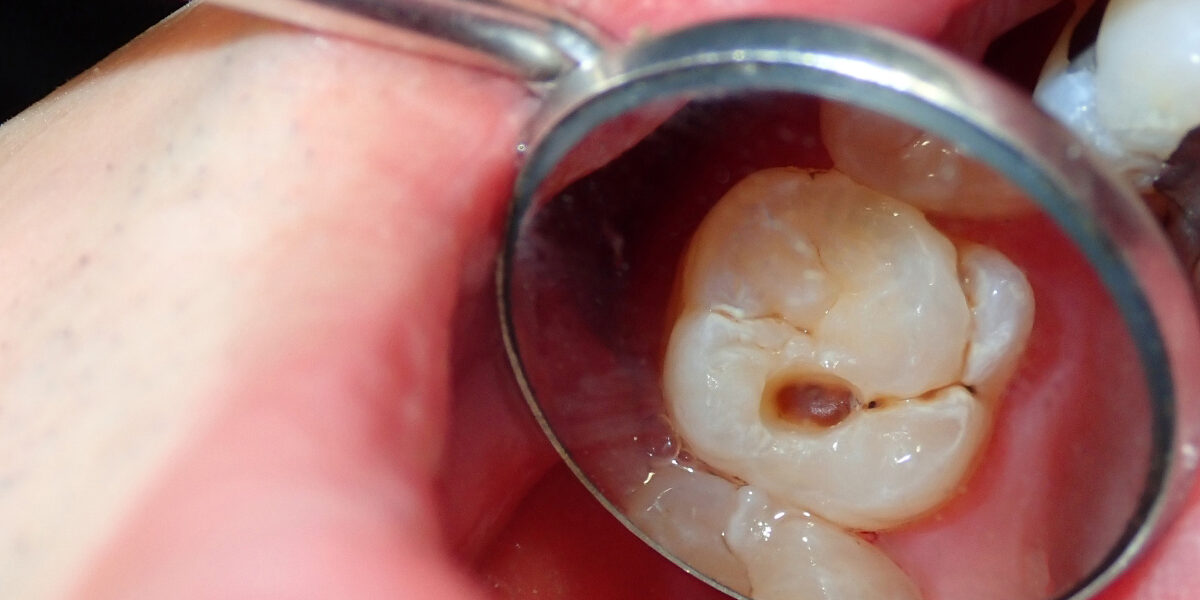
When a dentist identifies an area of tooth decay, it can be easy to assume that drilling and filling are automatically the next steps. In many situations, a restoration is necessary to stop disease progression and rebuild damaged tooth structure. But not every suspicious area on a tooth has reached the same stage, and not every early area of decay requires immediate drilling.
A conservative dental evaluation asks several questions first. Is the tooth actually cavitated? Is the decay active? How deeply has it progressed? Is the pulp healthy? Can the area be kept clean? Is there a crack or failing restoration? Are there factors in the mouth that are continuing to drive the decay process?
At the Institute of Systemic Dentistry in Berkeley Heights, New Jersey, we believe removing natural tooth structure should have a clear clinical purpose. A holistic approach does not mean refusing to drill teeth when restorative treatment is necessary. It means understanding the condition thoroughly and using the least invasive treatment that can predictably control the problem.
Tooth Decay Is a Process Rather Than a Single Event
A cavity does not suddenly appear as a hole in an otherwise healthy tooth.
The process generally begins with demineralization. Acids produced within dental plaque remove minerals from enamel faster than they can be replaced. Early in this process, the enamel surface may still remain intact.
If the balance changes and the tooth receives enough protection, an early lesion may stabilize or remineralize. If damaging conditions continue, the lesion can progress until the tooth structure physically breaks down.
This difference between an early noncavitated lesion and a true structural cavity is one of the first things that should be considered before drilling.
The American Dental Association recognizes caries as a disease process that can be addressed with both restorative and nonrestorative approaches depending on the stage and characteristics of the lesion.
Is There Actually a Hole in the Tooth?
A dark area, white spot, stain, or change visible on an X-ray does not always mean that there is already a physical opening that must be filled.
The dentist should evaluate whether the enamel surface remains intact.
A noncavitated lesion may sometimes be managed through measures intended to stop or reverse mineral loss. Once a lesion has broken through the tooth surface and created an area that traps plaque and food, restorative treatment becomes more likely.
Location matters as well.
Decay in the deep groove of a molar is different from decay developing between two teeth or along an exposed root surface. Accessibility for cleaning, ability to monitor the lesion, and likelihood of progression all affect the decision.
Holistic dentistry should therefore begin with identifying exactly what type of lesion is present rather than treating every sign of decay the same way.
Is the Decay Active?
Another important question is whether the lesion appears to be progressing.
Some areas of decay are active. Others can become arrested or inactive after conditions in the mouth change.
The appearance and texture of the lesion, plaque accumulation, previous dental records, prior X-rays, cavity history, dietary habits, and overall caries risk can all provide useful information.
When earlier radiographs are available, comparing them with current images may also help determine whether an area has remained stable or changed over time.
This distinction matters because a stable early lesion may not require the same treatment as one that is clearly advancing.
Monitoring, however, should be an active strategy. It should include appropriate preventive measures and follow-up rather than simply ignoring the tooth.
How Deep Has the Decay Progressed?
Depth is a major part of treatment planning.
An early enamel lesion presents a very different situation from decay extending well into dentin and approaching the pulp.
As a cavity becomes deeper, there is less healthy tooth structure separating bacteria from the living tissue inside the tooth. The risk of pulpal inflammation and eventual infection increases.
This does not necessarily mean that every deep cavity should be aggressively drilled until all altered dentin has been removed.
Modern evidence-based restorative dentistry increasingly supports selective caries removal in appropriate vital teeth. The ADA’s restorative caries guideline recommends more conservative caries-removal strategies in many moderate and advanced lesions rather than automatically using complete or nonselective removal.
The goal is to control the disease while reducing unnecessary damage to healthy tooth structure and the pulp.
How Healthy Is the Pulp?
The pulp is the living tissue at the center of the tooth. It contains nerves, blood vessels, connective tissue, and cells involved in maintaining the tooth.
If decay is relatively shallow, the pulp may not be significantly affected.
As decay progresses deeper, the dentist needs to determine whether the pulp remains healthy, is reversibly inflamed, is irreversibly damaged, or has lost vitality.
Symptoms can provide important clues.
Does the tooth respond briefly to cold and recover quickly? Is there lingering sensitivity? Does pain develop without an obvious trigger? Does the tooth hurt when biting? Has swelling occurred?
Clinical testing and appropriate imaging may also be useful.
A conservative approach considers pulp health before extensive excavation because unnecessarily exposing or damaging a healthy pulp can turn a restorative problem into a much more complicated one.
Dental X-Rays Should Have a Reason
Radiographs can be extremely helpful for evaluating cavities, particularly decay developing between teeth where direct visualization is difficult.
But imaging should be based on clinical need.
Updated 2026 ADA and American Academy of Oral and Maxillofacial Radiology recommendations emphasize examining the patient and considering medical and dental history and existing images before deciding whether additional radiographs are needed. Imaging should be selected according to the individual’s diagnostic needs rather than taken simply because a standard interval has passed.
For cavity diagnosis, radiographs can help estimate lesion depth and identify areas that cannot be adequately evaluated visually.
They still represent one part of the examination.
A radiographic shadow should be interpreted together with what the dentist sees clinically, the patient’s symptoms, lesion location, risk factors, and previous findings.
Is the Tooth Cracked?
Decay is not the only reason a tooth can become painful or structurally compromised.
Cracks can produce symptoms that sometimes resemble those of a cavity or irritated pulp.
A patient may experience sharp pain when biting, sensitivity to cold, or discomfort that comes and goes.
The dentist should therefore look at the structural condition of the tooth before simply preparing a filling.
A small fracture limited to one portion of a tooth may require a different restoration from a crack involving a large cusp. A deeper fracture extending toward the root may significantly affect the prognosis.
Drilling the visible area without understanding the crack could leave the larger structural problem unresolved.
Is an Existing Filling Part of the Problem?
Many cavities occur around older dental restorations.
A filling can wear, fracture, develop marginal defects, or have recurrent decay around it. But the presence of a visible imperfection does not necessarily mean the entire restoration must always be removed.
The dentist should determine what is actually failing.
In some situations, repairing a localized defect may preserve more natural tooth structure than replacing a large restoration completely.
In others, recurrent decay or extensive breakdown makes replacement necessary.
This is an important principle of minimally invasive dentistry.
Every time a restoration is replaced, additional natural tooth structure may be lost. Preserving healthy enamel and dentin where possible can help slow the cycle of progressively larger restorations over a patient’s lifetime.
How Much Healthy Tooth Structure Can Be Preserved?
Before drilling, a dentist should think about what the tooth will look like after the disease has been treated.
How much healthy enamel remains?
How strong are the cusps?
Has the tooth already had several restorations?
Will removing additional structure substantially weaken it?
A small cavity in an otherwise intact tooth may be restored very conservatively. A large lesion involving multiple surfaces may require a different type of restoration.
This is one reason the size of the final preparation should not be determined solely by an old-fashioned concept of making a filling large enough to mechanically lock it into place.
Modern adhesive dentistry can often allow more conservative preparations in appropriate situations.
Preserving natural tooth structure is not simply a philosophical preference. It can affect the long-term strength and maintainability of the tooth.
Can the Lesion Be Managed Without Drilling?
For appropriate early lesions, the answer may sometimes be yes.
Depending on the location, activity, and patient’s risk, nonrestorative management may include improved plaque control, dietary changes, remineralization strategies, fluoride when appropriate, sealants, or other professionally applied treatments.
The ADA has evidence-based recommendations for nonrestorative management of certain cavitated and noncavitated lesions, including options such as sealants, fluoride therapies, and silver diamine fluoride depending on the tooth and lesion involved.
These approaches should not be interpreted as proof that every cavity can heal without treatment.
Their usefulness depends on the specific clinical situation.
A large structural defect, deep active decay, or a lesion that cannot be adequately cleaned may still require a restoration.
Why Did the Decay Develop?
Drilling removes diseased tooth structure, but it does not necessarily remove the conditions that caused the disease.
This is where a holistic evaluation becomes particularly valuable.
If a patient suddenly develops several cavities, we want to understand why.
Has the diet changed?
Has snacking become more frequent?
Is the patient slowly sipping sweetened coffee or another beverage throughout the day?
Has a new medication caused dry mouth?
Is gum recession exposing vulnerable root surfaces?
Are teeth crowded and difficult to clean?
Has brushing or interdental cleaning changed?
Simply placing fillings without investigating the underlying pattern can result in additional cavities developing around other teeth.
Saliva Is an Important Part of Cavity Risk
Saliva is one of the mouth’s primary natural defenses.
It helps wash away food debris, neutralize acids, buffer changes in oral pH, and supply minerals involved in remineralization.
Patients with reduced salivary flow can experience a major increase in cavity risk.
Dry mouth may be associated with medications, dehydration, medical conditions, mouth breathing, age-related factors, or combinations of these issues.
When a patient who previously had few cavities suddenly begins developing multiple areas of decay, assessing the oral environment can be just as important as determining which teeth need fillings.
Repairing the existing damage is necessary, but preventing the next cavity requires understanding what has changed.
Diet Should Be Evaluated Realistically
Dietary counseling should involve more than telling patients to stop eating sugar.
Frequency of carbohydrate exposure is often important.
Repeatedly sipping or snacking throughout the day can create frequent periods in which bacteria produce acids that promote mineral loss.
The type of food, how long it remains around the teeth, when it is consumed, and what the patient drinks afterward can all influence the oral environment.
A realistic discussion may identify relatively simple changes that reduce repeated acid exposure without requiring an unrealistic diet.
This broader evaluation is part of addressing the disease rather than only repairing its consequences.
Home Care Can Influence Whether Conservative Treatment Succeeds
A nonrestorative or monitoring strategy only works when the conditions around the tooth can be controlled.
If plaque continually accumulates over an early lesion, disease progression becomes more likely.
That means the dentist should consider whether the area can realistically be kept clean.
A lesion between tightly contacting teeth may present different challenges from one on a smooth accessible surface.
For some patients, improving brushing and interdental cleaning may significantly change the oral environment.
For others, anatomy, dexterity, orthodontic appliances, restorations, or other factors may make plaque control more difficult.
Treatment planning should reflect those realities.
The Patient’s Overall Cavity Risk Matters
Holistic dentistry looks at the patient rather than evaluating one spot in isolation.
A person who has had very little decay for decades and develops one small lesion has a different risk profile from someone developing several new cavities every year.
Caries risk can be influenced by previous decay, existing restorations, plaque levels, diet, saliva, exposed root surfaces, oral hygiene, medications, and other clinical factors.
That broader risk assessment can influence how comfortable the dentist is monitoring an early lesion versus recommending intervention.
A conservative approach does not mean taking unnecessary chances with an actively progressing disease.
It means matching treatment intensity to the actual level of risk.
Dental Materials Should Be Considered Before the Tooth Is Prepared
If drilling is necessary, another important question is what will replace the removed tooth structure.
Composite resins, glass ionomer materials, ceramics, and other restorative materials each have particular indications, benefits, and limitations.
Material selection should ideally be considered before preparation begins because the restoration being planned can influence how much tooth structure needs to be removed.
At the Institute of Systemic Dentistry, we also believe patients should have an opportunity to discuss the materials being placed in their mouths.
A holistic approach considers biocompatibility while still taking into account strength, sealing ability, longevity, location of the restoration, moisture control, esthetics, and the patient’s bite.
The objective is not merely to use a material described as biological. It is to select a material that makes sense for the entire clinical situation.
The Bite Should Be Part of the Examination
Teeth are exposed to substantial mechanical forces.
Clenching and grinding can contribute to cracks, worn enamel, fractured fillings, weakened cusps, and sensitivity.
If excessive bite forces are contributing to damage, simply repairing the cavity may not address the complete problem.
The dentist should consider wear patterns, fractured restorations, muscle symptoms, bite relationships, and other signs that a tooth may be experiencing excessive force.
Protecting a restoration can sometimes require addressing why the tooth became structurally compromised in the first place.
A Filling Is Not Always the Smallest Treatment
There is an interesting paradox in conservative dentistry.
Sometimes delaying treatment allows a small problem to become a much larger one.
An early lesion that can be stabilized should not necessarily be drilled.
But an actively progressing cavity that already requires restoration should not automatically be watched simply because the patient wants to avoid dental work.
As decay progresses, more tooth structure may be lost. The cavity may reach the pulp. The tooth may eventually require a much larger restoration, pulp therapy, root canal treatment, or extraction.
Conservative dentistry therefore involves timing as much as technique.
The least invasive opportunity to treat a tooth may be the one available today.
Holistic Dentistry Is Not About Avoiding Necessary Treatment
A responsible holistic approach should not begin with the assumption that drilling is harmful and should always be avoided.
Dental decay is a real disease process.
When enough tooth structure has been destroyed, a restoration may be the best way to stop progression, restore function, and protect the remaining tooth.
The difference is that the procedure should have a clear reason.
We want to know that the lesion actually requires restorative intervention, understand its depth and activity, assess pulp and structural health, and plan the restoration before removing natural tooth structure.
That is very different from automatically drilling every suspicious area.
Ask Why Treatment Is Being Recommended
Patients should feel comfortable asking what their dentist found.
Is the lesion cavitated?
Has it changed since the previous examination?
How deep is it?
Is the pulp involved?
Could it reasonably be monitored?
Is a nonrestorative treatment available?
How much tooth structure needs to be removed?
What material will be used afterward?
These are reasonable questions.
The purpose is not to challenge necessary dental treatment. It is to understand the diagnosis and why the proposed procedure provides an appropriate benefit.
A Conservative Approach to Dental Treatment in Berkeley Heights
At the Institute of Systemic Dentistry in Berkeley Heights, New Jersey, we believe drilling should follow diagnosis rather than replace it.
Before recommending restorative treatment, we consider the stage and activity of decay, whether the tooth is actually cavitated, lesion depth, pulp health, cracks, existing restorations, remaining tooth structure, caries risk, saliva, diet, oral hygiene, biting forces, and the restorative material that may ultimately be required.
Sometimes that evaluation shows that an early lesion can be managed without drilling.
Other times, it confirms that a conservative restoration now is the best way to prevent substantially more treatment later.
Our goal is to preserve natural tooth structure whenever clinically reasonable while still treating active disease before it creates a larger problem.
If you have been told that you need a filling or other restorative treatment and would like to better understand the condition of your tooth, contact the Institute of Systemic Dentistry in Berkeley Heights, New Jersey to schedule an evaluation. We can examine the tooth, explain what we find, and discuss whether monitoring, conservative treatment, or restoration is appropriate for your individual dental needs.